“…..as a child, it was simply, being dragged around the world. I never realized until I was older, what a fantastic education into textiles, all that travel provided. From tapa cloth to Valentino silk, to silk hand knotted carpets. I saw it all……..”
The above was taken from the first paragraph of “my profile” for my online shop. I have a passion for silk, but am a lover of all natural fibres and textiles, and regrettably, I cut into a large piece of tapa cloth from Papua New Guinea, (decades ago when I was young and silly) to decorate the inside cover of a photo album.
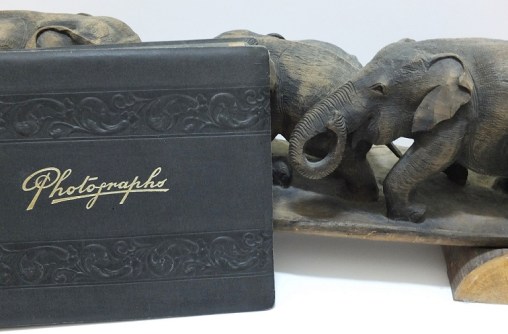
The remainder of the tapa cloth, which was large enough for a traditional wrap skirt….. well, who knows where it is now!
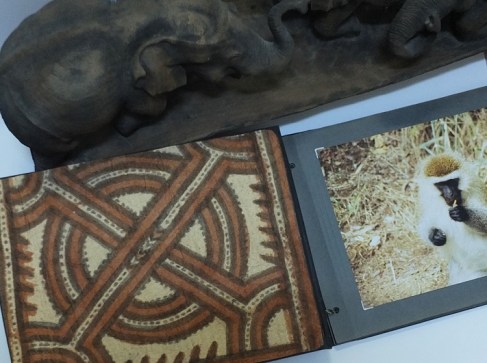
Tapa cloth is an interesting natural textile, primarily made in the Islands of the Pacific: Tonga, Samoa, Fiji, Papua New Guinea, Solomon Islands, Cook Islands, Vanuatu, Java and Hawaii. It is made from bark – the best tree being the paper mulberry tree (broussenetia papyrifera). The process differs a little, from one area to another, but the basics are as follows.
-The bark is stripped from the tree.
-It has two layers, an inner and outer layer. The outer layer of bark is scraped or split off from the inner bark and is discarded.
-The inner bark is dried in the sun before being soaked.
-It is then beaten with wooden mallets to make it thinner, and the strips wider. The side of the mallet with the course grooves is used first, then the flat.
-When the strips are thin enough, several are taken and beaten together to form a larger sheet.
-Starch from sweet potatoes or tapioca can be rubbed on to places which are unwilling to stick.
-Uneven edges are then trimmed off with a knife or the sharp edges of shells.
The designs/patterns on the tapa are created by staining, painting, stamping and stencilling with traditional colours used from clay, native plant dyes, fruits and charcoal. Designs, (often owned), differ from one area to another. They are occasionally figurative, but are more commonly, captivating, irregular geometrics.
Tapa is often worn as a lap lap or skirt on formal occasions such as weddings. Other uses are as blankets, room dividers, wall hangings and other decorative items. It has been used in ceremonial masks in Papua New Guinea and, in the Cook Islands was used to wrap sacred objects.
Often the women from a whole village work together on a huge piece of tapa, which can reach up to 60 metres in length.

Tapa cloth trivia:
-Captain Cook was the first European to collect it and introduce it to the rest of the world.
-One downside of tapa cloth is that it loses its strength and can tear if it gets wet.
Until my next textile/fabric blog…..
Think long and hard before chopping into any traditional textile.
Online store http://www.etsy.com/shop/lunarsilk
Instagram lunar_silk
Twitter @lunarsilk_
 Lunar Silk